IP resources

HomePatentsTrademarksFAQTeam

Patent practice guide

Preparation, fees, and issuance

We draft and file U.S. utility and design patent applications, including applications that claim foreign priority. The cost depends on technical complexity, the state of the invention disclosure, the drawings, and the requested scope. We offer fixed-fee and hourly arrangements and set out the retainer, government charges, and payment milestones in the engagement proposal. Small- and micro-entity discounts apply to certain USPTO fees when the eligibility requirements are met.

Government and legal fees can arise during examination and at issuance. We prepare issuance paperwork and handle assignment recording. We can prepare basic drawings and coordinate with a professional drafter when the invention requires more complex drawings. Check the USPTO fee schedule for government charges.

Filing and examination

We turn a technical disclosure into a specification, claims, and drawings as appropriate, then file electronically. During examination, we review the examiner’s objections or rejections and advise on interviews, amendments, and written arguments. Timing depends on the docket and technology. For eligible cases, the USPTO aims for a final disposition within 12 months on average after granting Track One status.

Provisional and international applications

A provisional application can establish an early U.S. filing date for subject matter it adequately describes. It is not examined. Applicants generally have 12 months to file a corresponding application claiming the benefit of the provisional. A PCT application provides a common international filing process and an international search, with examination or further steps as applicable. It can defer certain national filing and translation costs. Applicants then pursue rights before individual national or regional offices. Many use a deadline around 30 months from the earliest priority date, but office-specific rules apply.

How to start

Send a nonconfidential description, identify relevant parties for a conflict check, and flag any offers for sale, public disclosures, filings, or deadlines. After engagement, we can review sketches, technical details, and known material prior art. A patent applicant’s duty to disclose material information does not generally impose a duty to conduct a prior-art search.

Start a patent inquiry →

Trademark practice guide

U.S. registration and protection

A trademark identifies the source of goods or services. U.S. rights may arise through use, and federal registration can strengthen enforcement against confusingly similar uses. Certain famous marks can also qualify for dilution protection. U.S. filing bases include use, intent to use, qualifying foreign applications or registrations, and Madrid extensions. The registration requirements depend on the basis.

Madrid and direct foreign filings

Trademark rights are territorial. The Madrid System provides a centralized way to request protection in selected member jurisdictions. Each designated office applies its own registration rules. Direct national or regional filings may also be appropriate, depending on the markets and filing basis.

Oppositions, cancellations, and enforcement

An opposition challenges an application after publication. A cancellation targets an existing registration. Grounds and time limits vary. Examples include likelihood of confusion, abandonment, and fraud. We represent clients bringing or defending these proceedings and advise on infringement and enforcement.

Start a trademark inquiry →

Frequently asked questions

Do trademarks and patents protect the same rights?

A trademark identifies the source of goods or services. A patent gives its owner the right to exclude others from practicing the claimed invention. Copyright protects original expression.

What is a patent?

A U.S. patent grants a right to exclude others from making, using, offering to sell, selling, or importing the patented invention in the United States. Practicing an invention may still require permission under other patents or regulatory approvals.

What is patentable?

Utility patents can cover eligible processes, machines, articles of manufacture, compositions of matter, and improvements. The claimed invention must meet requirements including novelty, nonobviousness, utility, and adequate disclosure.

Is it necessary to commercialize the invention before applying for a patent?

You can apply before commercializing an invention. Tell counsel about any planned launch, offer for sale, or public disclosure before it happens.

Is an idea enough to file a patent application?

A working prototype is generally unnecessary. The application must describe the invention in enough detail to show possession and enable a person skilled in the field to make and use it.

What is prior art?

Prior art can include patents, published applications, papers, presentations, public use, and sales. Earlier-filed patent documents can also matter even if they became public later.

What can disqualify my invention from being patented?

Prior art, an inadequate disclosure, or a disclosure or sale before filing can affect patentability. U.S. exceptions are fact-specific, and foreign rules can differ. Have counsel review the exact dates and circumstances before relying on a grace period.

What are the next steps if I want to file a patent application?

Start with a nonconfidential patent inquiry, the names needed for a conflict check, and any known deadlines. We can request the full technical disclosure after confirming engagement.

How long does a patent last?

U.S. utility and plant patent terms generally run 20 years from the applicable nonprovisional filing date, subject to adjustments and other exceptions. U.S. design patents generally run 15 years from grant for applications filed on or after May 13, 2015. Utility maintenance fees are due 3½, 7½, and 11½ years after grant. Design and plant patents have no U.S. maintenance fees.

Can a U.S. patent be enforced internationally?

U.S. patent rights are territorial. A PCT application can support a later filing in participating jurisdictions, where national or regional offices decide whether to grant a patent.

What can be patented?

Utility patents cover eligible functional inventions. Design patents protect original ornamental designs for articles of manufacture. Plant patents can protect eligible, asexually reproduced plant varieties.

What are the advantages and disadvantages of a provisional patent application?

A provisional application can support an earlier filing date for the subject matter it adequately describes. It is not examined and generally must be followed within 12 months by an application that properly claims its benefit.

I’m unsure which type of patent I need. What should I do?

The same product may have both functional and ornamental features worth protecting. The filing strategy depends on what is new and what competitors could copy.

Does the USPTO publish patent applications?

Most U.S. utility applications publish about 18 months from the earliest claimed filing date. Exceptions include qualifying nonpublication requests. Foreign or PCT filing plans can affect eligibility for nonpublication.

Can non-U.S. citizens apply for a patent or trademark in the U.S.?

Foreign applicants can seek U.S. protection. Trademark applicants domiciled outside the United States must generally use a U.S.-licensed attorney before the USPTO. Patent filings can also involve foreign filing-license requirements.

Can a U.S. trademark be extended internationally?

Eligible applicants can use the Madrid System to seek protection in participating jurisdictions based on a qualifying U.S. application or registration. The six-month period generally relates to claiming priority, and an eligible U.S. basis may still be used after that period without that priority claim.

About IP Jurists PC

Our practice brings together patent professionals with backgrounds in engineering, software, mathematics, and science. We use AI-assisted tools for routine work and apply our technical and legal judgment to drafting, prosecution, and portfolio strategy.

Our team

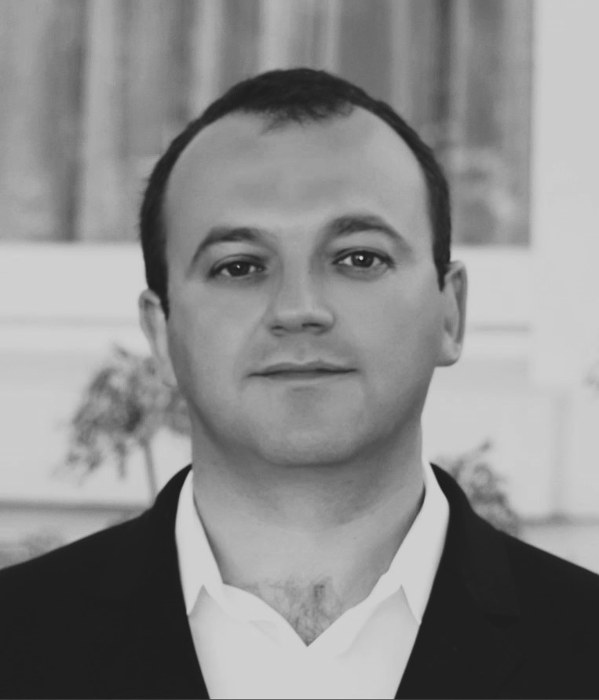
Georgiy Khayet

Georgiy Khayet

Principal and registered patent attorney

Georgiy Khayet is a registered patent attorney and the principal of the firm.

With extensive experience in intellectual property law, his practice focuses on patent drafting and procurement (both U.S. and international) across a wide range of technical fields, including artificial intelligence, machine learning, wearable technology, facial and gesture recognition, parallel cloud computing, data mining, data security, fintech, and robotics.

Before establishing his own firm, Georgiy worked as a patent attorney at leading Silicon Valley patent firms, gaining deep expertise in complex IP matters.

In addition to patents, he provides strategic guidance on international and domestic trademark counseling and enforcement.

Admitted to Practice

California (2007) · U.S. Patent and Trademark Office (2007)

Education

Whittier Law School, Costa Mesa, California (Juris Doctor, Certificate in Intellectual Property, CALI award)

UC Berkeley, Berkeley, California (BA in Applied Mathematics with emphasis in Computer Science)
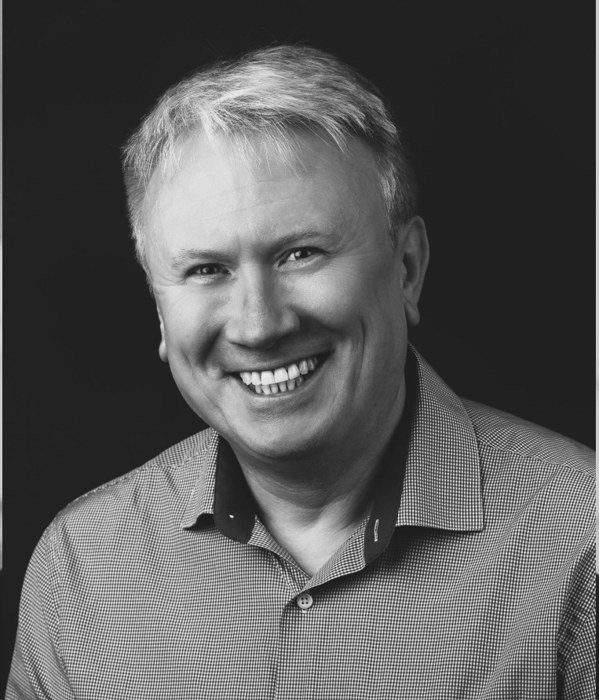
Nikolai Balabanov

Nikolai Balabanov

Patent analyst

Dr. Balabanov is a patent analyst at the firm, specializing in the preparation and prosecution of patents across various technological fields.

Before joining the firm, he worked as a scientist and contributed extensively to the field of computational physical chemistry, co-authoring over 20 scientific papers.

Education

Washington State University, Pullman, WA (a post-doctoral researcher)

University of Texas at Austin, Austin, TX (a post-doctoral fellow)